Korean Stews & Hotpots for Melbourne Winters: What to Order in Chinatown
A practical guide to Korean stews and hotpots to warm you on cold Melbourne days, with tips on what to look for, how to order for groups, spice and portion considerations, and how Seven Star Chinatown’s generous sides and quick service shape the experience.

Why Korean stews and hotpots suit Melbourne winters
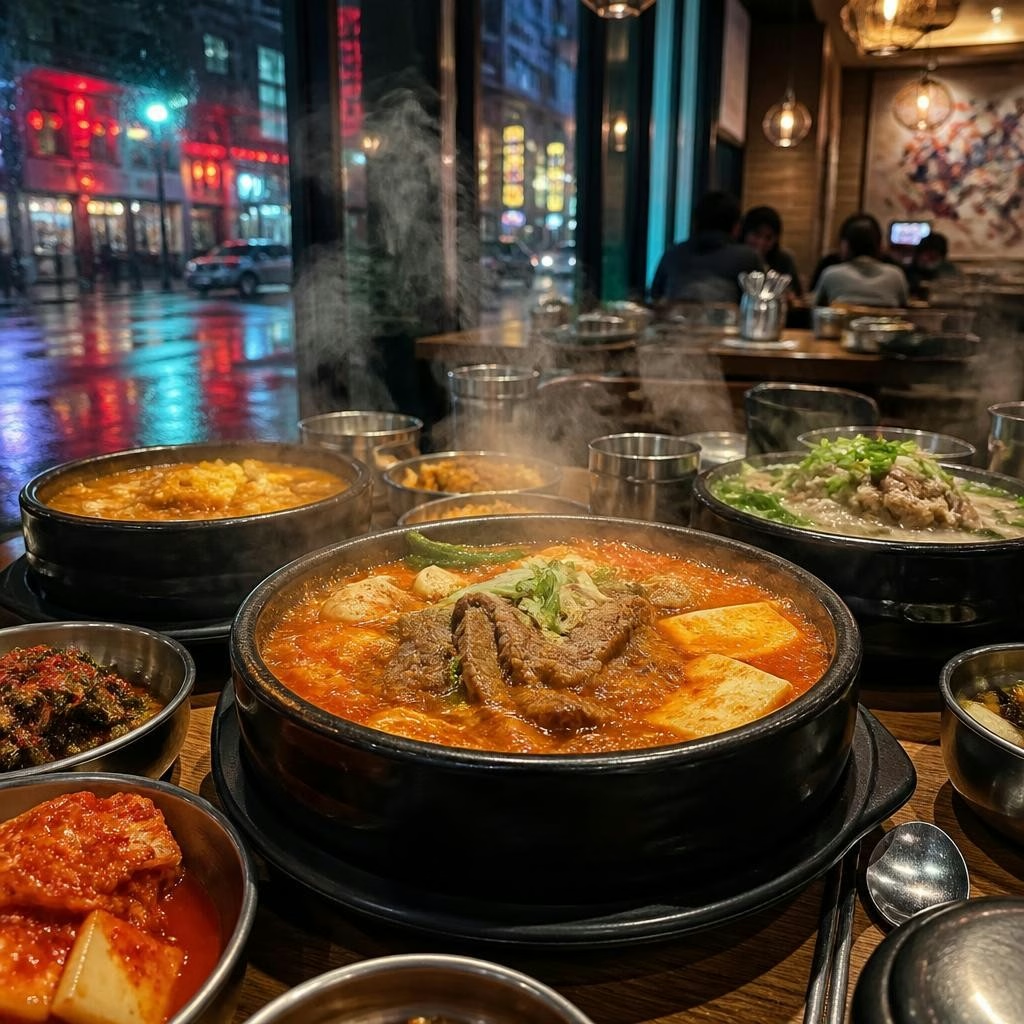
Korean stews (jjigae) and hotpots (jeongol / bubbling communal pots) are ideal for chilly Melbourne days: they arrive piping hot, combine warming broths with hearty ingredients, and are designed to be shared. In a city centre setting like Chinatown, these dishes offer a comforting, sociable meal after a winter walk through the CBD streets.
Quick primer: stew versus hotpot
A simple way to tell them apart: a jjigae (stew) is typically served in a single pot already mixed with its ingredients and bubbling in a spicy or savory broth, while a hotpot or communal pot is often presented for the table to share and may be finished or adjusted at the table. Both styles focus on bold flavours, but hotpots often emphasize shared cooking and flexible ingredient combinations.
Classic stews and hotpot styles to look for
When you’re choosing, watch for familiar winter classics: kimchi stew for tangy, spicy warmth; soft tofu stew (sundubu) for silky texture; army stew (budae jjigae) for a rich, mixed-protein option; and bean-paste stew (doenjang jjigae) for a deeply savoury broth. Some diners also seek sliced-beef or clear-broth soups for a milder, beef-forward option. These represent the range from fiery to soothing — ask staff if you need guidance on heat levels.
How Seven Star Chinatown enhances the stew experience
Customers frequently note that stews and soups arrive quickly and are served with plentiful complimentary side dishes, making them particularly satisfying for groups. Reviews highlight generous portions and a lively atmosphere in the Chinatown area, which means stews at Seven Star Chinatown are often ordered to share alongside other plates such as pancakes or grilled items. Friendly, attentive service helps when you want the broth adjusted or tips on portioning for your table.
Spice, portioning and sharing tips
Many Korean stews are spicy by nature; if you or friends have low spice tolerance, ask for a milder preparation or request that chilli be reduced. Portions at this venue are described as large and well suited to sharing — plan stews as a centrepiece and add one or two sharing plates per 2–3 people. The abundant banchan (side dishes) that accompany the meal will stretch the dining experience and offer cooling contrasts to spicy broths.
Good pairings to order alongside stews
To create a balanced winter meal, consider pairing a stew with a savoury pancake (jeon), kimchi or pork belly for texture contrast, and sharing items like fried chicken or mandu if you want variety. Reviewers specifically mention enjoying pancakes, chicken and the variety of side dishes with their soups, which makes for a communal, layered meal that suits groups and late-evening dining alike.
Practical advice for visiting in Melbourne CBD
Seven Star Chinatown sits on Little Bourke Street in Melbourne’s Chinatown precinct, making it convenient after work or for a night out in the CBD. Reviewers note the venue can be lively and is suitable for group dinners; food tends to be served promptly, and the setting is comfortable for social gatherings. During winter evenings consider arriving a little earlier to secure a table, especially for larger groups, and mention any dietary or spice preferences to staff when ordering.
Article by
Seven Star Pocha Chinatown
Authentic Korean Bistro